Void Filling — The Engineering Behind Every Lift
Void Filling & Soil Stabilization in Scottsdale
Every slab we lift starts with a void underneath it. Sometimes we catch that void before the slab has visibly dropped — this is that service on its own.
What a void actually is, and how it forms
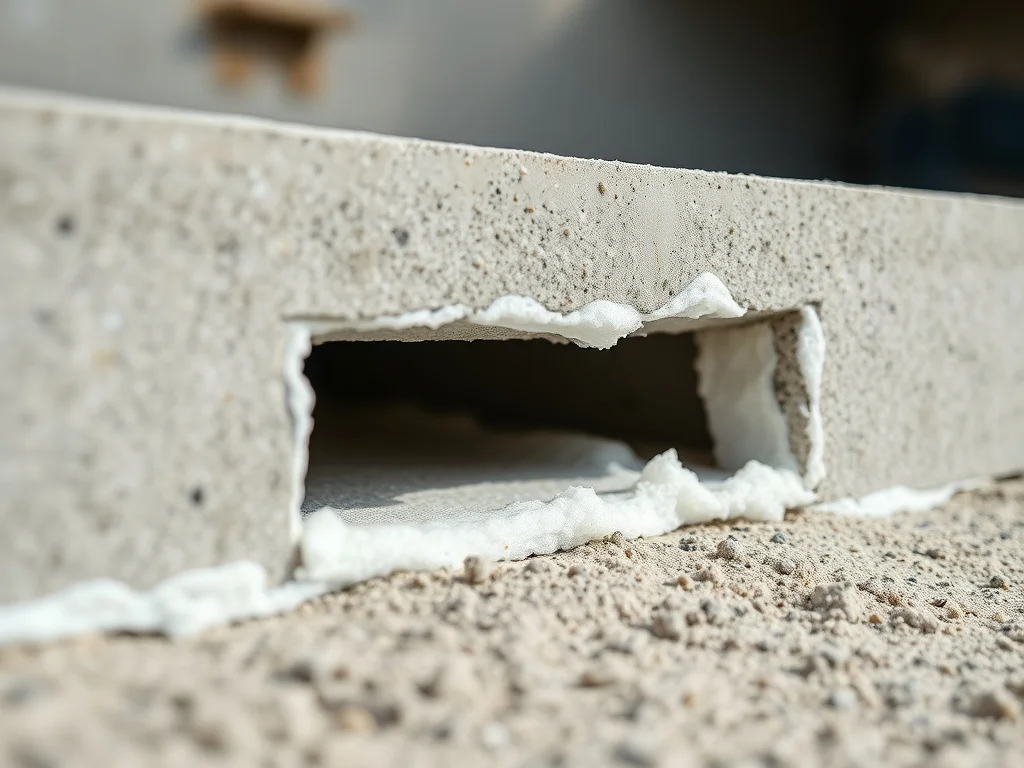
A void is empty or loosened space between a slab and the soil it's supposed to bear on. In Scottsdale, three mechanisms create most of them: monsoon runoff scouring base material out from under a slab edge, a slow plumbing or irrigation leak washing fines out from underneath over months, and the natural shrink-swell cycle of expansive clay and caliche opening gaps as the soil dries and contracts.
A slab can sit over a real void for a surprisingly long time without dropping, because concrete has some ability to span a gap before it fails — right up until it doesn't, and either cracks under load or drops all at once. Sounding for voids before that happens is cheaper than lifting after.
- A hollow or drumming sound when you tap or walk heavily on the slab
- A slab that flexes slightly underfoot near a wall or column
- Recent monsoon flooding or a known slow leak nearby
- Cracking that appears suddenly with no visible settlement yet
How we sound for and fill a void
We survey the suspect area by tapping and listening for the hollow signature of a void, cross-check against the drainage or leak history you can tell us, then drill a minimal pattern of 5/8-inch holes to inject foam directly into the empty space. Because the slab hasn't dropped, this is often a lighter-touch job than a full lift — the goal is filling the void and re-establishing full bearing contact, not raising elevation.
The foam expands to fill irregular void shapes that a rigid material can't reach, and because it weighs only a couple of pounds per cubic foot, it doesn't add meaningful new load to soil that's already shown it can't carry much.
Soil stabilization for loose or compressible ground
Beyond filling a discrete void, the same injection technique can stabilize a broader area of loose or compressible soil — useful under a slab edge that's chronically wet, along a retaining structure, or ahead of a hardscape project where the existing ground needs firming up before new concrete goes down. Foam permeates and binds loose soil particles, increasing bearing capacity without excavation.
When to call before a slab drops
If you just had a slow leak repaired, if a recent monsoon flooded a specific low spot on the property, or if a slab sounds hollow but hasn't visibly moved yet, that's exactly the window this service is for. Filling the void now is a smaller, cheaper job than lifting a dropped slab later — and it's a call we specifically encourage, because it's less billable work for us in the long run and a better outcome for you.
Get a void assessment
Describe what happened — a leak, a flood, a hollow sound — and where, and we'll tell you honestly whether it's worth a visit now or safe to keep an eye on.
Void Filling & Soil Stabilization FAQs
Straight answers before we drill
We sound the slab by tapping and listening for the hollow signature of empty space underneath, cross-referenced against any known leak or flooding history. It's a quick, low-cost inspection compared to waiting for visible settlement.
Generally yes — filling a void before it grows and before the slab drops is usually a smaller injection job than a full lift later, because there's less volume to fill and no elevation correction required.
Yes — the same injection technique can firm up loose or compressible soil ahead of a new hardscape pour, without excavation, if the existing ground is a known problem area.
Monsoon runoff scouring base material from under an edge, a slow plumbing or irrigation leak washing out fines over time, and the shrink-swell cycle of expansive clay and caliche opening gaps as the soil dries and re-wets.
Sunken concrete? Get it lifted this week.
Free estimates across Scottsdale. Most residential lifts finished in under a day — driveable in 15 minutes.