Old Town & South Scottsdale Soil: Why the Canal-Front Neighborhoods Settle Differently
Most concrete settlement content written about Scottsdale defaults to the newer North Scottsdale subdivisions — DC Ranch, Grayhawk, Troon — where fresh fill and young flatwork dominate the conversation. That's a real pattern, but it skips over a genuinely different settlement story unfolding in Old Town, South Scottsdale, and the Airpark corridor, where the concrete is older, the lots sit closer to the canal system, and decades of mature landscaping irrigation have shaped the soil in ways new construction hasn't had time to.
Older Concrete, Different Failure Mode
A driveway or sidewalk poured in the 1970s or 80s in Old Town or South Scottsdale has had forty-plus years of Scottsdale's shrink-swell cycle to work on it — far more cumulative stress than a five-year-old North Scottsdale slab still working through its first few seasons of fill consolidation. The settlement pattern looks different too: rather than a single dramatic drop, older South Scottsdale concrete tends to show gradual, uneven multi-panel settlement, where several adjacent sections have each moved a little rather than one section dropping a lot.
That distributed pattern is actually good news for lifting: it usually means the concrete itself is sound (older Scottsdale mix designs were generally poured thick and dense), and the fix is a broader but shallower injection pattern across several panels rather than a deep lift under one.
Canal-Front and Irrigation-District Lots
South Scottsdale and parts of the Airpark corridor sit closer to the Arizona Canal and the older flood-irrigation and turf-lot infrastructure that predates most of North Scottsdale's development. Lots on or near scheduled irrigation delivery — whether flood-irrigated turf or simply decades of heavier landscape watering than a xeriscaped North Scottsdale yard — see more consistent soil moisture cycling near the house. That's a double-edged pattern: consistently moist soil settles less dramatically than a soil that goes bone-dry and then floods in a single monsoon storm, but it also means expansive clay pockets in these areas have had more cycles of shrink-swell stress over the decades, which shows up as the gradual multi-panel movement described above.
Mature Landscaping Changes the Water Story
A forty-year-old South Scottsdale lot often has mature trees and shrubs with root systems that have spent decades pulling moisture from the soil near the house — sometimes enough to create localized dry pockets that behave differently from the surrounding yard during a monsoon soak. When we're called to a settlement problem in Old Town or South Scottsdale, part of the inspection is looking at what's actually growing near the affected slab, because a mature Texas ranger hedge or an old citrus tree can be doing as much to the local soil moisture as the monsoon itself.
What This Means for a Lift
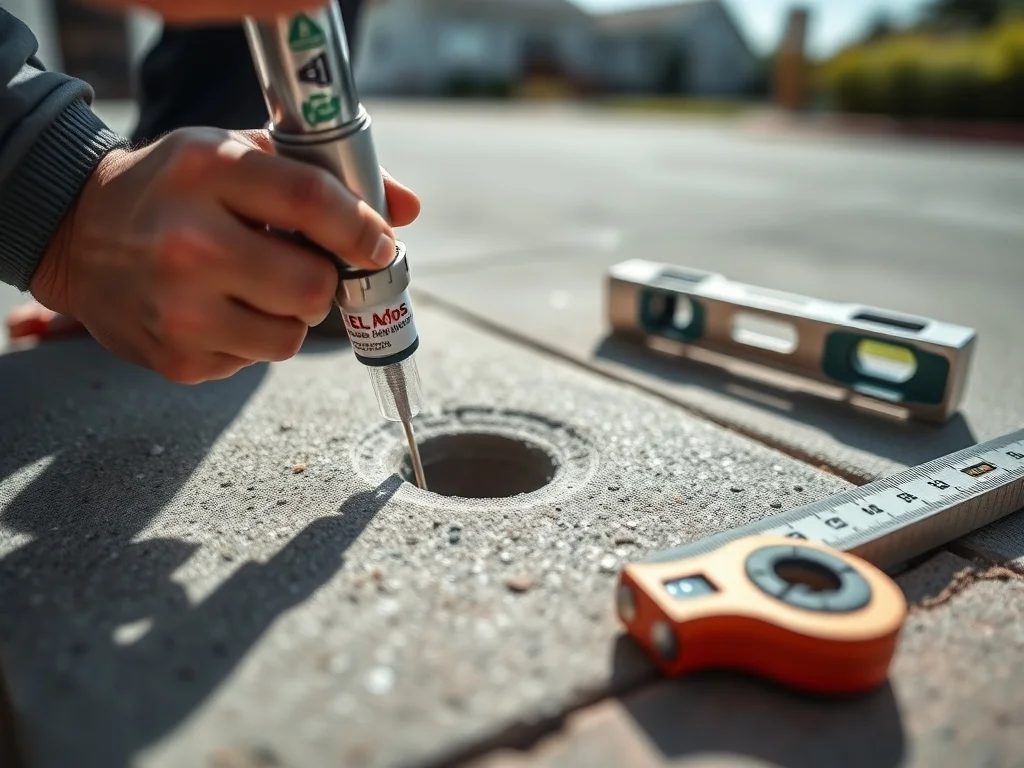
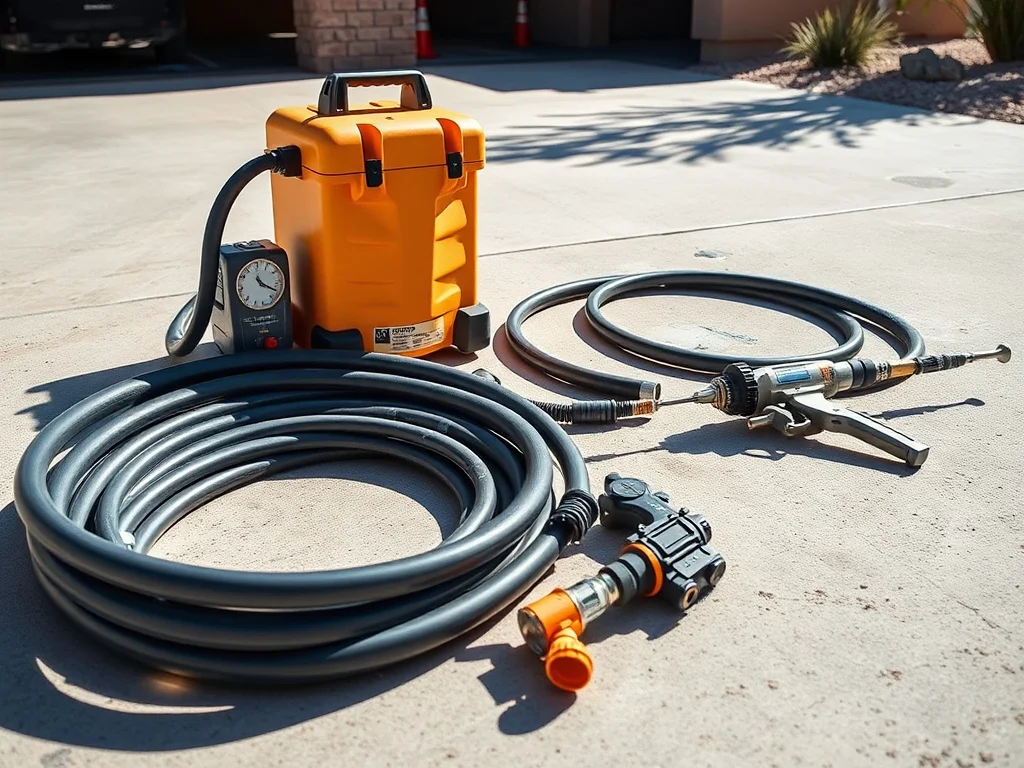
For a South Scottsdale or Old Town property, the practical difference shows up in the injection plan: expect a wider pattern of lighter injection points across multiple panels rather than a concentrated lift under a single dramatic drop, and expect us to ask about nearby landscaping and irrigation history as part of the inspection — not just recent monsoon activity. The lifting method itself doesn't change, but reading the settlement pattern correctly does, and that read starts with knowing the neighborhood's specific water and soil history, not just its zip code.
Airpark Corridor: A Commercial Variant of the Same Pattern
The Airpark corridor's mix of commercial pads, retail centers, and light-industrial flatwork adds forklift and delivery-truck traffic loads on top of the same older-soil settlement pattern — which tends to accelerate joint and edge failure at loading areas specifically. For commercial and HOA properties in this corridor, that's usually the first place we look during a walkway or drive-lane survey.
If Your Old Town or South Scottsdale Slab Is Settling
Whether it's a driveway near the canal, a patio under a mature tree, or a walkway on an Airpark commercial lot, the questions we ask before drilling are the same: how old is the concrete, what's the irrigation and landscaping history nearby, and does the settlement pattern look like one dramatic drop or several smaller ones across adjacent panels. Send us that context along with photos and we'll come back with a realistic read before the on-site visit.
Ready for a real number?
Free estimates across Scottsdale — measured on site, fixed price before any drilling starts.